Food Recipe GP & Margin Control:How to Stop Losing Money to Cost Creep and Build Real Profitability
It is Tuesday morning, accounting has run the monthly P&L, and margin is down 3%.
The sales team points to competitive pricing. The production team says nothing has changed.
Finance finds a supplier invoice price increase, but it’s only 2%. Something else is missing from the story.
This is what happens when recipe costing is disconnected from production reality.
You have standard costs, but you don’t really know what products are costing to make today.
Recipe costing is the process of calculating the exact cost of ingredients required to produce one unit of a finished product. It accounts for ingredient quantity, supplier cost, waste factors, and yield loss. Margin control is the ongoing discipline of ensuring actual batch costs stay within target, and pricing reflects true cost plus desired profit.
The Real Cost of a Recipe
Recipe costing is not just adding up ingredient prices. It is understanding everything that flows into a finished unit.
- Direct materials: ingredient cost per unit in the formula.
- Waste & yield loss: trim, spoilage, and shrinkage built into the cost.
- Packaging: primary and secondary packaging per unit.
- Labour allocation: production labour cost per batch and per unit.
- Overhead allocation: facility, utilities, and equipment time.
- Price variance: the difference between standard cost and actual supplier invoice.
Why Recipe Costing Breaks Down (And Margins Disappear)
Hidden Margin Erosion
Most food manufacturers don't know their real batch cost until weeks after production. By then, the damage is done. Small slips in ingredient usage, unaccounted waste, and supplier price changes stack up silently. You might be selling at yesterday's cost, not today's.
Recipe Drift Over Time
Recipes change. Operators adjust quantities to handle waste or quality issues. A "standard" recipe becomes a moving target. Without tracking actual usage against formula, you lose control of costs. What was profitable six months ago might be losing money now.
Supplier Price Volatility
Ingredient costs don't stand still. Commodity prices shift, suppliers negotiate new rates, and exchange rates swing. If you're not tracking cost changes recipe by recipe, batch by batch, you're pricing products on assumptions, not reality. That's how margins disappear.
A Worked Example: Where Margin Gets Lost
The figures below are an illustrative example, not a customer result. They use round numbers to show how small, individually reasonable changes combine to move gross profit.
Illustrative scenario: fresh fruit smoothie mix
Standard Recipe (Set 6 Months Ago)
What Actually Happened (Today)
Real Batch Cost Today
The gap: 6.8 percentage points of gross margin lost, with no change to pricing and no change in visibility.
Cost per unit moved from £0.80 to £0.97, so £0.17 of profit per unit disappeared. At 10,000 units a month that is £1,700 of lost profit every month — and nobody noticed until the P&L came in.
How Most Businesses Handle Recipe Costing (And Why It Fails)
Static Recipes in ERP
A recipe is set once a year. Supplier invoices come in throughout the month, but the system never updates the standard cost. Ingredient prices can swing 20% in a quarter, but your costs stay frozen in January.
Gap Between Recipe and Reality
The recipe says 250g per unit. Operators adjust for waste, humidity, or line speed. Actual usage is 270g, but nobody updates the cost calculation. It exists only in production records, not in your margin calculations.
Manual Variance Analysis (Weeks Too Late)
Price variances are found during monthly close. By then, 30 days of batches have already been made at the wrong cost. You know margin is off, but you can’t pinpoint which products or when the drift started.
Yield Loss Estimates, Not Reality
Your recipe assumes 5% yield loss. That number came from a test run two years ago. Current reality might be 8% due to equipment drift or seasonal variation, but you are still costing at 5%.
What Good Recipe Costing Looks Like
Live ingredient costingupdated daily from actual invoices, not locked in annually.
Actual batch cost capturelinked to production records so you see real usage vs formula.
Real-time margin visibilityso you know if a batch is profitable today, not on last month’s P&L.
Yield tracking by batchto spot when process loss drifts above target.
Cost alertswhen batch cost exceeds threshold, before margin damage spreads.
How TracyCore Delivers Real Recipe & Margin Control
Linked Recipe to Production
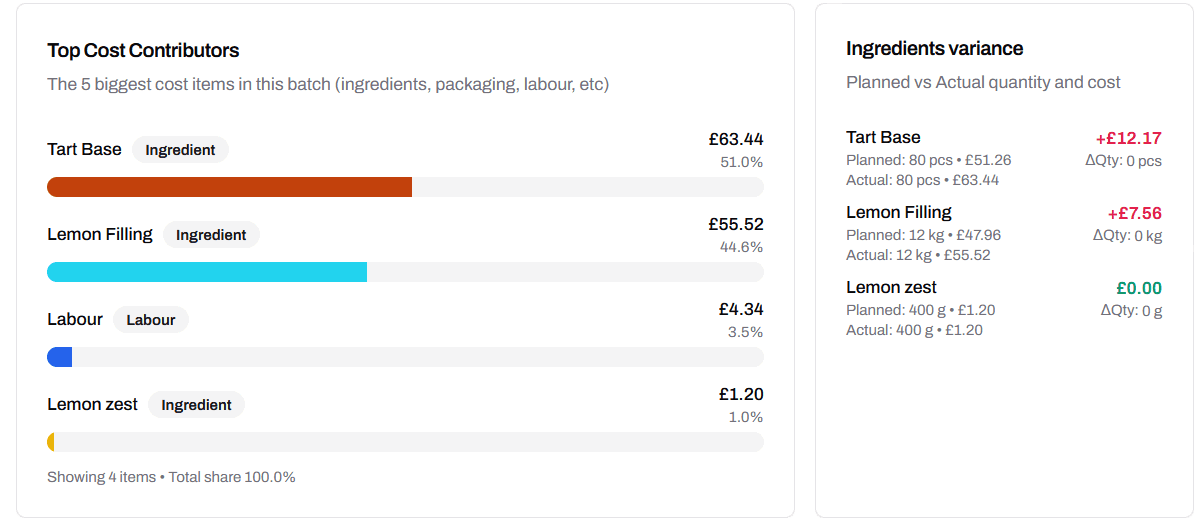
Every batch record is tied to a recipe with live ingredient costs. Operators still follow the formula, but actual usage is recorded and compared to standard in real time.
Live Ingredient Cost Updates
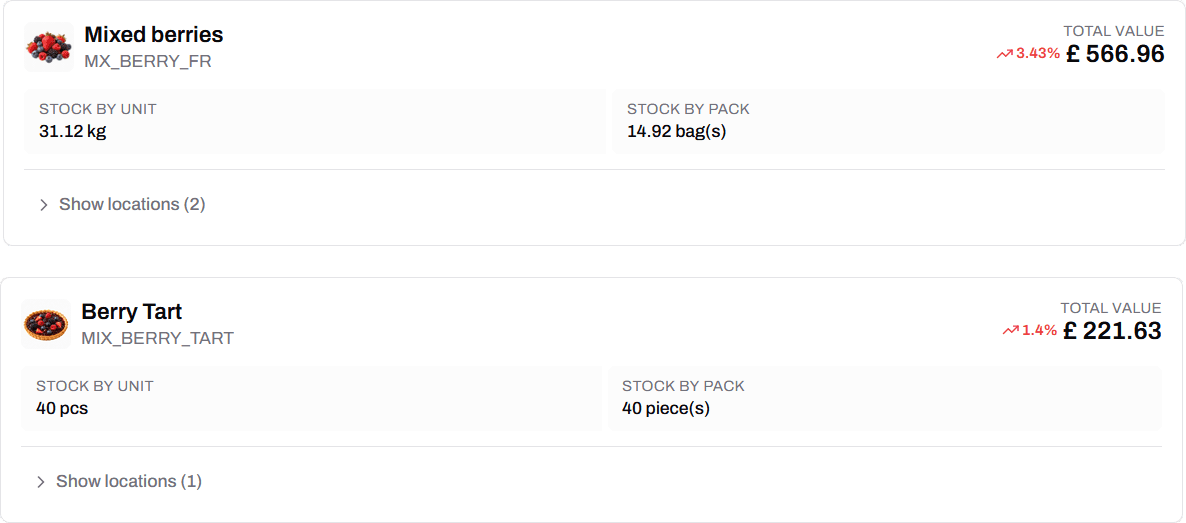
Supplier invoices are matched to purchase orders, and ingredient costs update automatically. Recipe costs recalculate daily, so you always know the true standard cost of a batch.
Batch-Level Cost Analysis
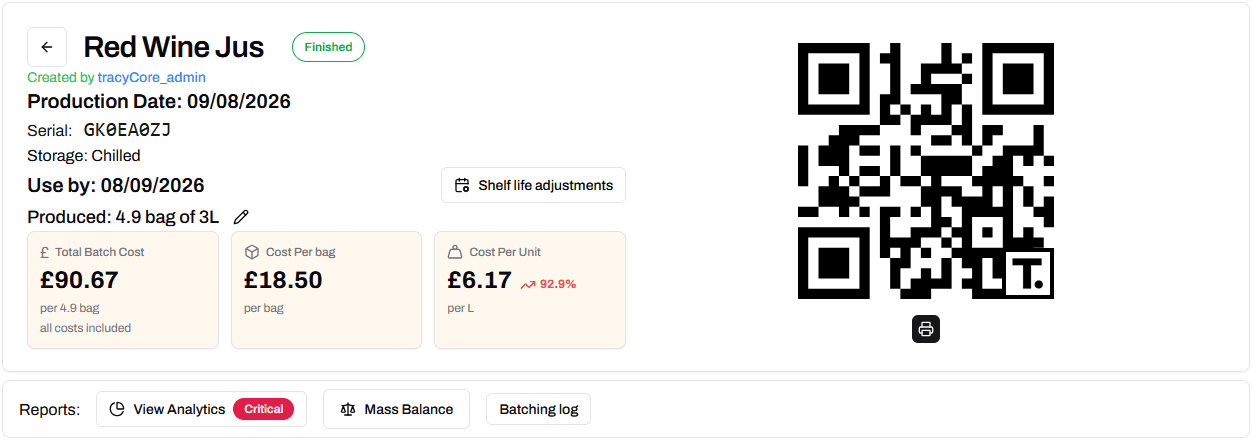
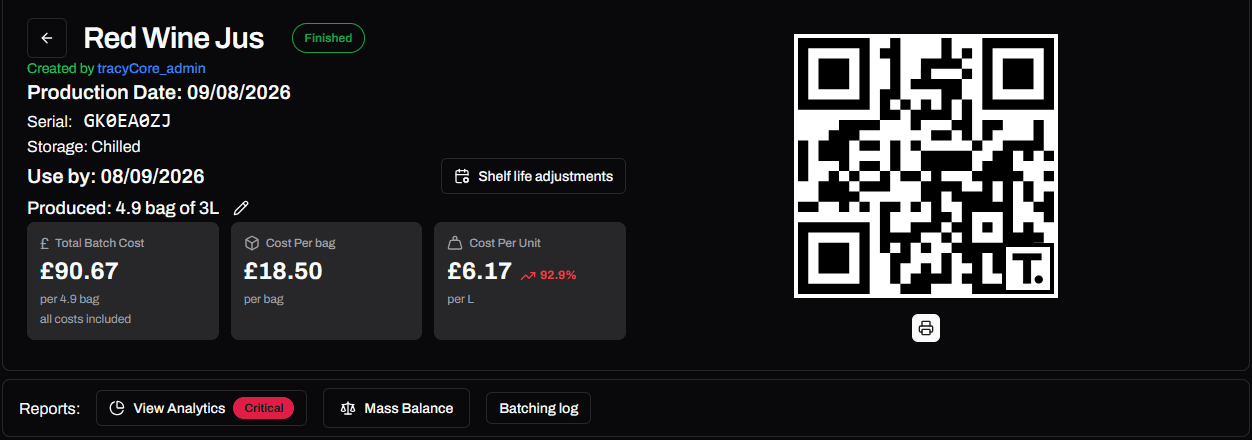
Every batch shows standard cost, actual cost, variance, and margin impact. You can drill into any batch to see cost history and spot trends before they become margin disasters.
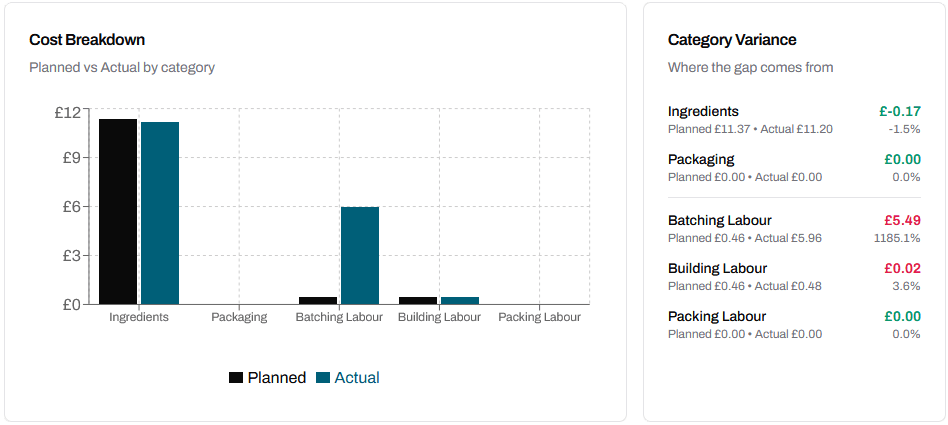
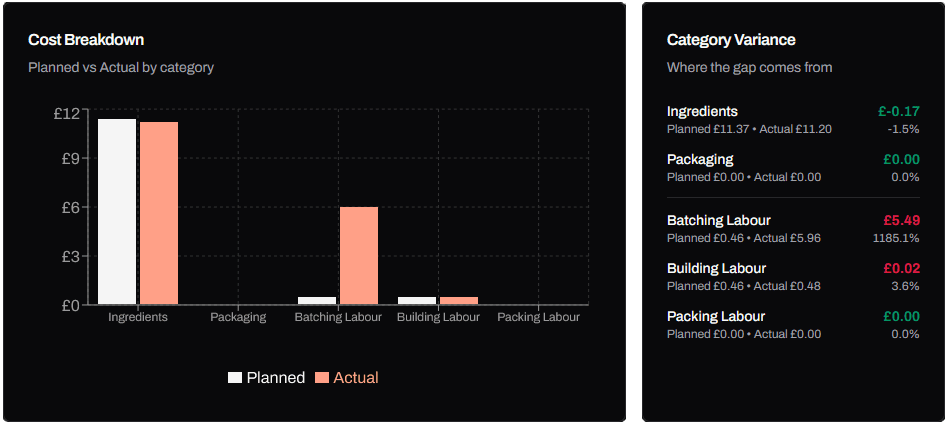
Yield & Waste Tracking by Batch
Every batch captures actual yield loss. If a recipe assumes 5% waste but you are hitting 8%, the system flags it and adjusts the cost. Over time, you can adjust formulas based on real data, not guesses.
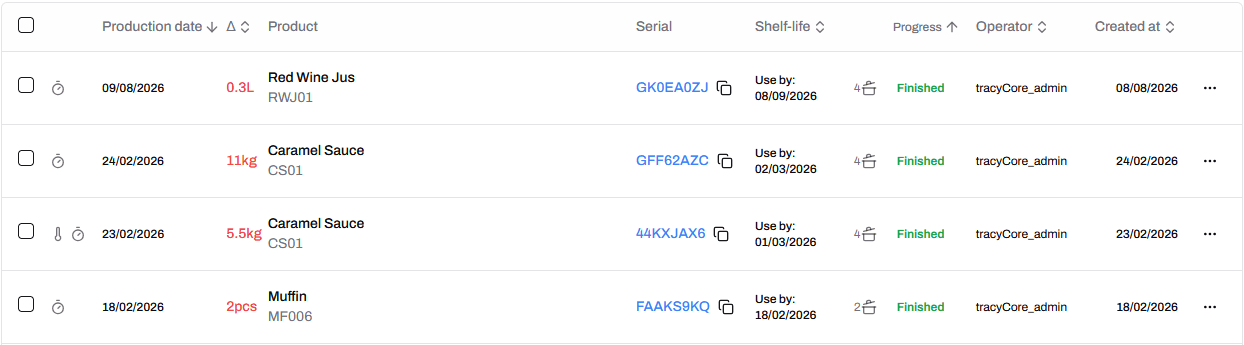
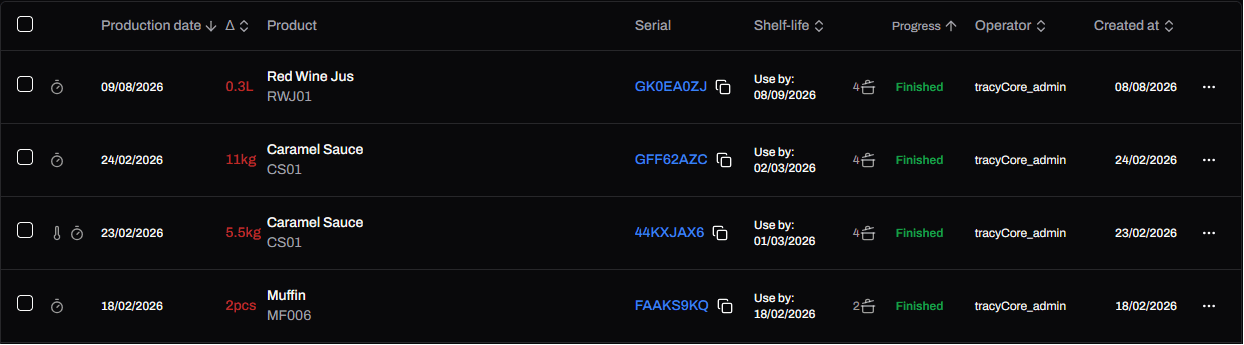
Instant Margin Visibility by Batch
A dashboard shows current GP by batch based on today’s costs and latest sales price. You see margin drift as it happens, not at month-end close. Alerts trigger when batch margin falls below threshold.
Conclusion
In food manufacturing, margin is not set at the price point. It is protected every day in the factory. Every adjustment to a recipe, every supplier price change, and every batch of waste either erodes or protects your profit.
If you are still discovering margin loss at month-end close, you are already too late. Real costing analytics let you lead margin, not chase it.
Ready to take control of your recipe costs and margins? If your team is still relying on static recipes and manual variance analysis, this is the first place to improve.
FAQ
How often should I update recipe costs?
Ideally, daily. As suppliers send invoices and purchase orders are matched, ingredient costs should update automatically. This ensures your margin calculations are never more than a day out of sync with reality.
At minimum, weekly updates should happen. Monthly updates often mean you are costing batches incorrectly for 3-4 weeks at a time.
What is a normal yield loss percentage?
It depends on the product and process. For basic mixing and packaging, 2-5% is typical. For products with trim (fresh produce, meat), 5-15% is common depending on the cut and handling.
The key is to track your actual yield loss and update it as processes improve or deteriorate. If you assume 5% but run 8%, that 3% gap stacks up and erodes margin significantly.
How do I know if a product margin is really collapsing?
Track actual batch cost against standard cost, and actual selling price against target margin. If multiple batches show cost variance > 5% or margin variance > 3%, investigate immediately.
Common culprits are:
- Supplier price increase not reflected in recipe
- Actual yield loss above formula assumption
- Sales price not updated to new cost reality
- Quality rework or scrap not tracked
What happens if my actual batch cost is higher than standard?
That is a variance. Small variances (< 2%) are normal and can be due to small ingredient measurement differences, minor waste, or supplier lot differences.
Larger variances (> 5%) need investigation. They often point to:
- Process loss higher than expected
- Recipe not being followed (different quantities used)
- Ingredient quality issues requiring more material
- Cost data not updated in the system
Address these systematically, and your actual costs will converge with standard. If they don’t, the standard itself needs updating.
How does rising ingredient cost affect my pricing strategy?
Real batch costing should trigger pricing reviews. If ingredient costs rise 10%, you can’t maintain margin by making more volume or cutting waste. You need to either increase price, reduce content, or accept lower margins.
The visibility to see this quickly (not at month-end) is what separates proactive businesses from reactive ones. Monitor cost variance weekly, and make pricing decisions before competitor pressure forces them.
Where this fits in TracyCore
Recipe costing depends on two things being accurate at the same time: what stock actually moved, and what the numbers say afterwards.
- Analytics and reporting — batch cost, variance and margin reporting by product.
- Inventory management — the stock movements and yield figures batch costing is calculated from.
More guides: Visit the blog index.